
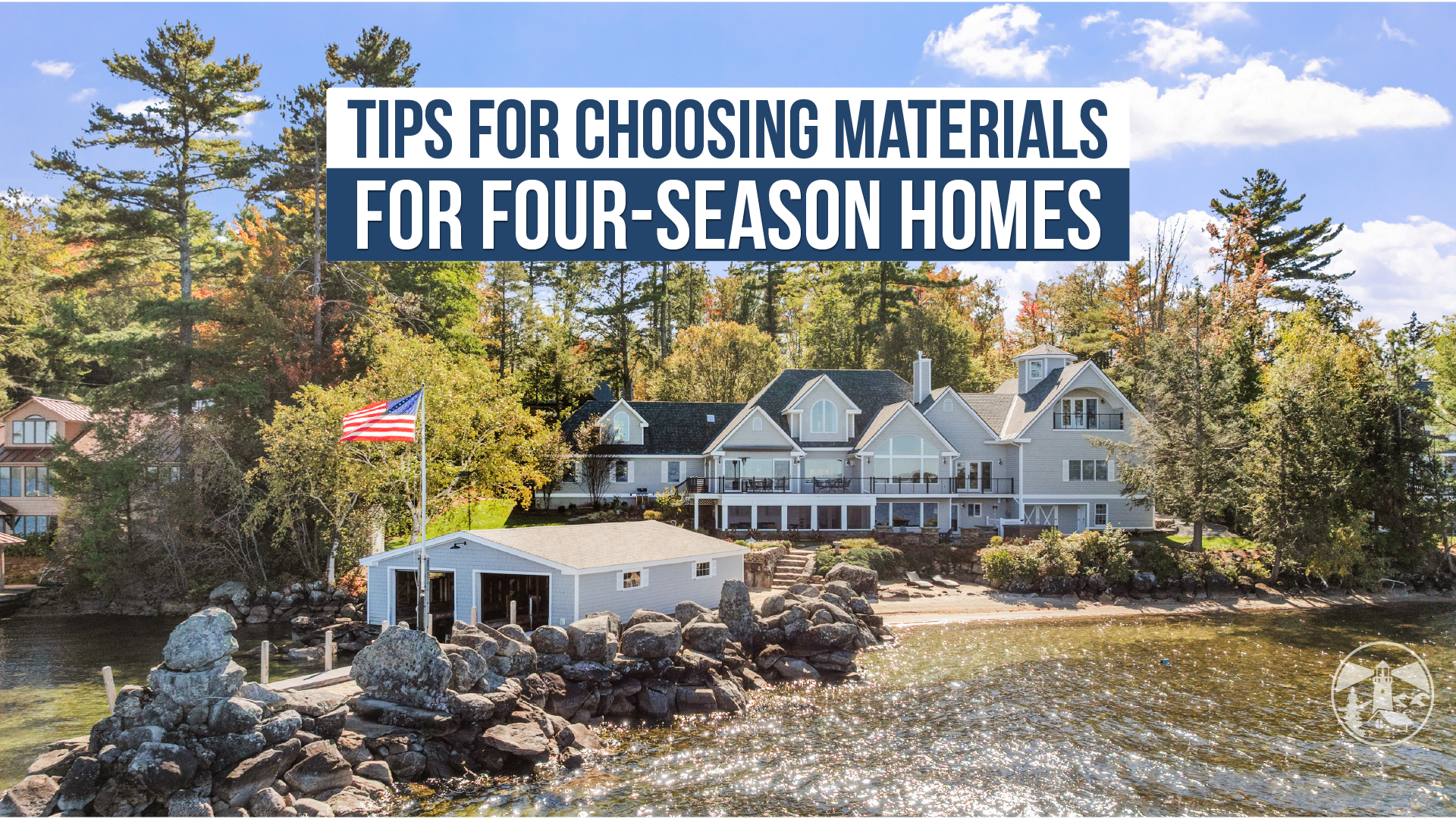
Living in the Lakes Region of New Hampshire means your home has to perform in every season – mud and grit in the spring, humidity in summer, wet leaves in fall, and snow, salt, and dry heat in winter. If you’re remodeling a kitchen, bath, mudroom, lower level, or looking for a full home renovation, material selection isn’t just about looks. It’s about choosing finishes that stay beautiful through real life conditions in a four-season climate.
Why Four-Season Homes Need Smarter Material Choices
Before getting into specific recommendations, it helps to understand what makes New Hampshire homes different:
Moisture swings: Indoor humidity fluctuates dramatically across seasons, affecting wood movement and finish performance.
Snow, salt, and grit: Entryways, mudrooms, and garages see abrasive debris that can scratch and dull finishes fast.
Freeze/thaw cycles: Temperature changes can stress tile installations and adhesives when products or prep aren’t right.
Everyday wear: Lakes Region homes often have active households: kids, pets, guests, and weekend traffic.
The right materials reduce maintenance, prevent premature wear, and help your home look newly remodeled for years.
Flooring That Holds Up Against Boots, Paws, and Life in the Lakes Region
1) Engineered Hardwood: The Best Blend of Warmth and Stability
If you love the look of real wood flooring options but want better performance through seasonal humidity swings, engineered hardwood is often the sweet spot. Unlike solid hardwood, engineered planks are built in layers, which helps reduce cupping and gapping.
Engineered hardwood consists of a genuine hardwood veneer top layer bonded over high-quality plywood or core layers, offering the authentic look and feel of solid wood with improved stability, moisture resistance, and versatility.
Best for: living rooms, hallways, kitchens (with the right product), bedrooms
What to look for:
- A thicker wear layer (so it can be refinished if needed)
- A durable factory finish (matte finishes tend to hide micro-scratches better)
- Wider planks only if the product is rated for your conditions and properly installed
Pro tip: Consider a slightly textured or wire-brushed finish. It disguises everyday wear far better than a glossy floor.
2) Luxury Vinyl Plank (LVP): Durable, Low-Maintenance, and Comfortable
Today’s LVP has come a long way. It’s a top performer in four-season homes because it’s water-resistant, easy to clean, and far more forgiving than tile underfoot.
Luxury Vinyl Plank (LVP) is a multi-layer vinyl flooring designed to mimic real wood planks, offering strong water resistance and making it a practical choice for spaces like kitchens, bathrooms, and basements. It’s built with a protective wear layer that helps resist scratches and stains, and it’s commonly installed as a click-lock floating floor for straightforward installation.
Best for: mudrooms, lower levels, kitchens, play spaces
What to look for:
- A thicker wear layer for scratch resistance
- A rigid core for stability
- A quality underlayment for sound and comfort
Where LVP shines: basements and walk-out lower levels – areas where moisture risk is higher and comfort matters.
3) Porcelain Tile: Ideal for High-Moisture, High-Traffic Zones
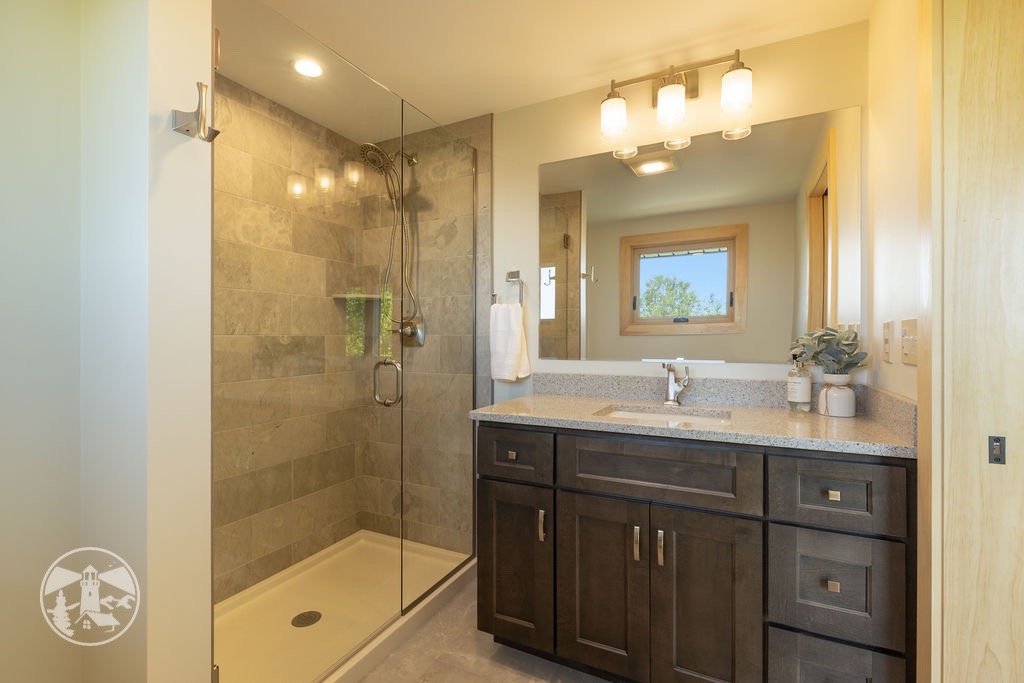
Porcelain tile is one of the most durable flooring options available. It’s dense, water-resistant, and tough enough for busy entries and bathrooms.
Porcelain tile is a dense, kiln-fired ceramic made from refined clays and fired at higher temperatures, which makes it harder, more durable, and far less porous than standard ceramic tile. Because it absorbs very little water (porcelain is typically classified as ≤ 0.5% water absorption), it’s a strong choice for bathrooms, showers, kitchens, entryways, and even many outdoor applications when properly specified.
Best for: bathrooms, laundry rooms, mudrooms, entries
What to look for:
- Slip resistance (especially for entryways and wet areas)
- Larger format tile for fewer grout lines (less maintenance)
- A thoughtful layout so it feels intentional, not scraped together
Bonus: Wood-look porcelain gives you the warmth of wood aesthetics with tile-level durability.
4) Natural Hardwood: Beautiful, But Choose Carefully
Solid hardwood can absolutely work in New Hampshire homes – especially in conditioned, main-level areas. The key is product selection, acclimation, and realistic placement.
Natural hardwood flooring is real wood (typically solid planks milled from a single piece of timber) that delivers an authentic grain, warmth, and a long service life. One of its biggest advantages is that it can be sanded and refinished multiple times over the years, but it does require stable indoor humidity and is more sensitive to moisture than resilient floors.
Best for: main living spaces, dining rooms, bedrooms
Avoid: mudrooms, wet entries, and below-grade basements
If you want hardwood throughout, we’ll often recommend engineered in the kitchen and main areas and a more moisture-tolerant option in the mudroom or lower level – so the whole home feels cohesive, but performance stays high.
Tile That Stays Tight, Clean, and Timeless
Tile is one of the smartest four-season choices – if it’s installed correctly and paired with practical finishes.
Porcelain vs. Ceramic: Which Is Better?
- Porcelain is denser and more water-resistant than ceramic, making it a stronger choice for wet environments and heavy traffic.
- Ceramic can still be a good option for walls and lighter-use spaces, often at a lower price point.
In most Lakes Region remodels, porcelain is the long-term investment option, especially for floors and shower surrounds.
Shower Systems: Where Durability Really Matters
A shower can look incredible on day one and still fail if the system behind the tile isn’t right. Four-season performance comes down to proper waterproofing, drain assemblies, and substrate prep.
What we prioritize:
- Proven waterproofing systems
- Correct slope and drainage planning
- Thoughtful grout and caulk joints where movement is expected
Grout: Don’t Overlook the “Maintenance Factor”
Grout choice affects how your tile looks long-term more than most homeowners expect.
Smart grout choices include:
- High-performance cement grout for strength and stain resistance
- Epoxy grout in high-moisture or heavy-use areas (it’s more resistant to staining but can be higher cost)
Color tip: Mid-tone grout (not pure white) hides everyday life best, especially in mudrooms and shower floors.
Tile Finishes: Matte vs Glossy
Glossy tile can be beautiful, but it shows water spots and requires more upkeep. Matte finishes are often a better option in busy New Hampshire homes. Matte tile is the safer default for floors and high-traffic areas because it reduces glare, hides smudges/mineral spotting, and typically offers better slip resistance when wet. Glossy (polished) tile is best kept to walls and backsplashes, where it’s easy to wipe clean but in showers and around sinks it will show hard-water spots and soap film faster, which means more frequent cleaning to keep it looking “new.”
Trim, Doors, and Millwork That Won’t Warp or Show Every Dent or Scratch
Trim might not be the first thing you think about – until it starts swelling, cracking, or scuffing. In four-season homes, material selection and paint quality matter.
Medium-Density Fiberboard (MDF) is an engineered wood fiber material that paints exceptionally well, giving you crisp lines and a consistent finish without knots or grain telegraphing through. The tradeoff is moisture sensitivity, so it’s best for interior trim in controlled, dry spaces and should be avoided where water, humidity, or frequent mopping are part of daily life unless you’re using a true moisture-rated product.
MDF vs. Wood Trim: What to Use and Where
- Paint-grade MDF is stable and smooth, making it great for interior trim in dry areas.
- Solid wood performs well but can move more with seasonal changes.
- Moisture-resistant options are best for bathrooms, laundry rooms, and mudrooms.
Our approach: Choose trim materials based on location and moisture exposure, then pair it with a paint system that holds up to cleaning and daily wear.
Baseboards and Casings: Go Taller for a Custom Look (and Better Protection)
Taller baseboards don’t just look better – they protect walls from boots, vacuums, and everyday contact. In high-traffic areas like hallways and mudrooms, that extra height can be a practical upgrade that also elevates the design.
Doors and Hardware: Small Choices, Big Payoff
Solid-core doors feel better, sound better, and tend to hold up better over time. For hardware, look for finishes that resist fingerprinting and wear – especially in kitchens and bathrooms.
Finishes That Stay Beautiful: Cabinets, Countertops, and Paint
Countertops: Quartz for Consistency, Stone for Character
- Quartz is durable, non-porous, and low maintenance – excellent for busy kitchens and bathrooms.
- Granite and other natural stones offer unique character but require sealing and more awareness around staining.
For many Lakes Region homeowners, quartz is the go-to because it performs well with minimal upkeep.
Cabinet Finishes: Durability Depends on the Coating
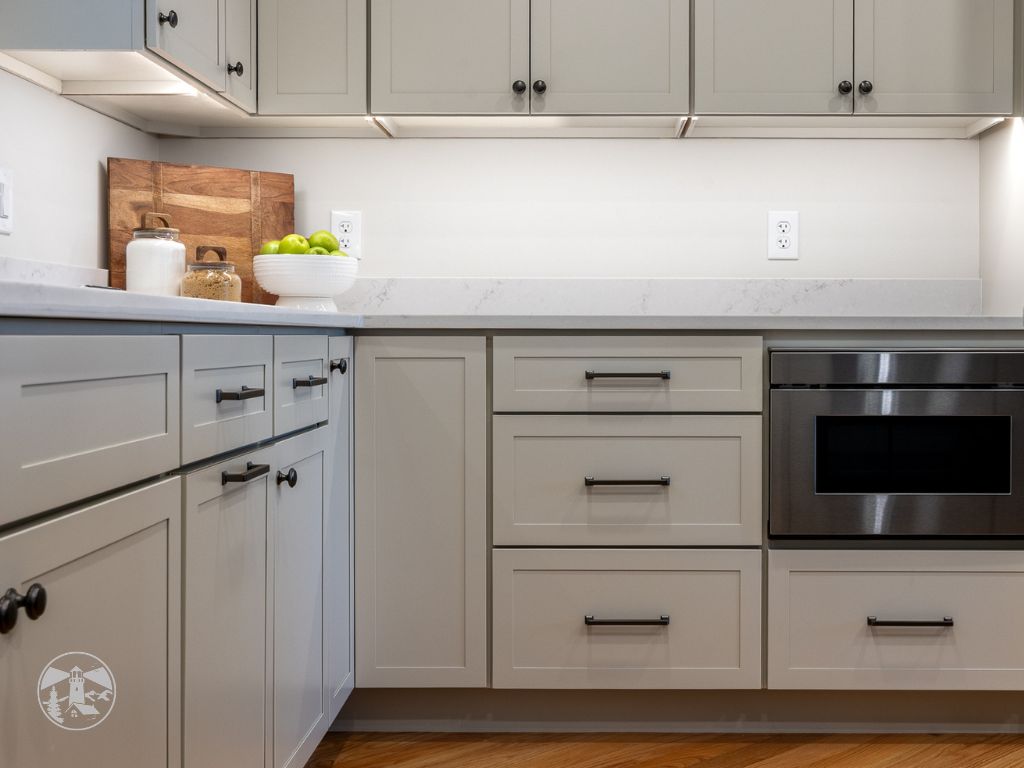
Cabinets take daily wear and tear – hands, cooking residue, cleaning products, and constant opening and closing. A durable finish system matters as much as the door style.
What to look for:
- Quality factory finishes or professional-grade finishing systems
- Hardware that supports the door weight and use
- Practical interior storage that reduces clutter and wear
Paint Sheen Matters More Than People Think
With today’s high-quality paints, washability isn’t limited to higher sheens anymore. Even lower-sheen finishes can hold up well in active homes with kids, pets, and everyday wear.
In lakefront homes especially, the strong natural light reflecting off the water can highlight imperfections. That’s why we often guide clients toward lower sheens on walls to create a softer, more forgiving finish.
- Matte / Flat: Ideal for ceilings and low-touch areas where a smooth, non-reflective finish is preferred.
- Eggshell: A balanced option for most walls, offering durability with a subtle, refined look.
- Satin: Our go-to for trim, doors, and wainscoting, where a bit more durability and definition helps architectural details stand out.
- Semi-gloss: Best reserved for select feature areas where a higher sheen is part of the design intent.
The Most Overlooked Four-Season Zones (And What to Choose There)
Mudrooms and Entries
These are the “front lines” of New Hampshire living. Prioritize:
- Porcelain tile or high-quality LVP
- Durable wall finishes (washable paint or paneling)
- Smart storage that keeps wet gear contained
Lower Levels and Basements
Below-grade spaces need materials that can handle moisture risk:
- LVP or tile is often best
- Engineered wood can work in certain conditions with the right prep
- Area rugs for warmth and comfort
Bathrooms
Bathrooms demand systems that are built right:
- Porcelain tile floors
- Proper waterproofing behind shower tile
- Moisture-tolerant trim and ventilation planning
How Lighthouse Helps You Choose Materials With Confidence
A four-season remodel isn’t just about picking what looks good in a showroom. It’s about selecting materials that match your lifestyle, your home’s conditions, and the way you want to live in the space – day after day, season after season.
At Lighthouse Contracting Group, our process helps you:
- Choose finishes that balance style and performance
- Avoid materials that look great but don’t hold up in New Hampshire conditions
- Create a cohesive look across kitchens, baths, mudrooms, and lower levels
- Make decisions with clarity – without second guessing every detail
Ready to Choose Materials That Hold Up (and Look Incredible)?
If you’re planning a kitchen, bathroom, mudroom, lower level, or full-home remodel in the Lakes Region of New Hampshire, Lighthouse Contracting Group is here to help you create a space that feels refined, functional, and built for real life.
Reach out to Lighthouse Contracting Group to start planning your remodel – and choose materials that will look great in every season.